ServicesInsurance Claims
Insurance Claims Repair in Orosi
After a wreck, most of the wait happens outside the shop: the adjuster visit, approvals and parts on order. We handle our side of your insurance claim, give you a realistic finish date and call you when anything changes.
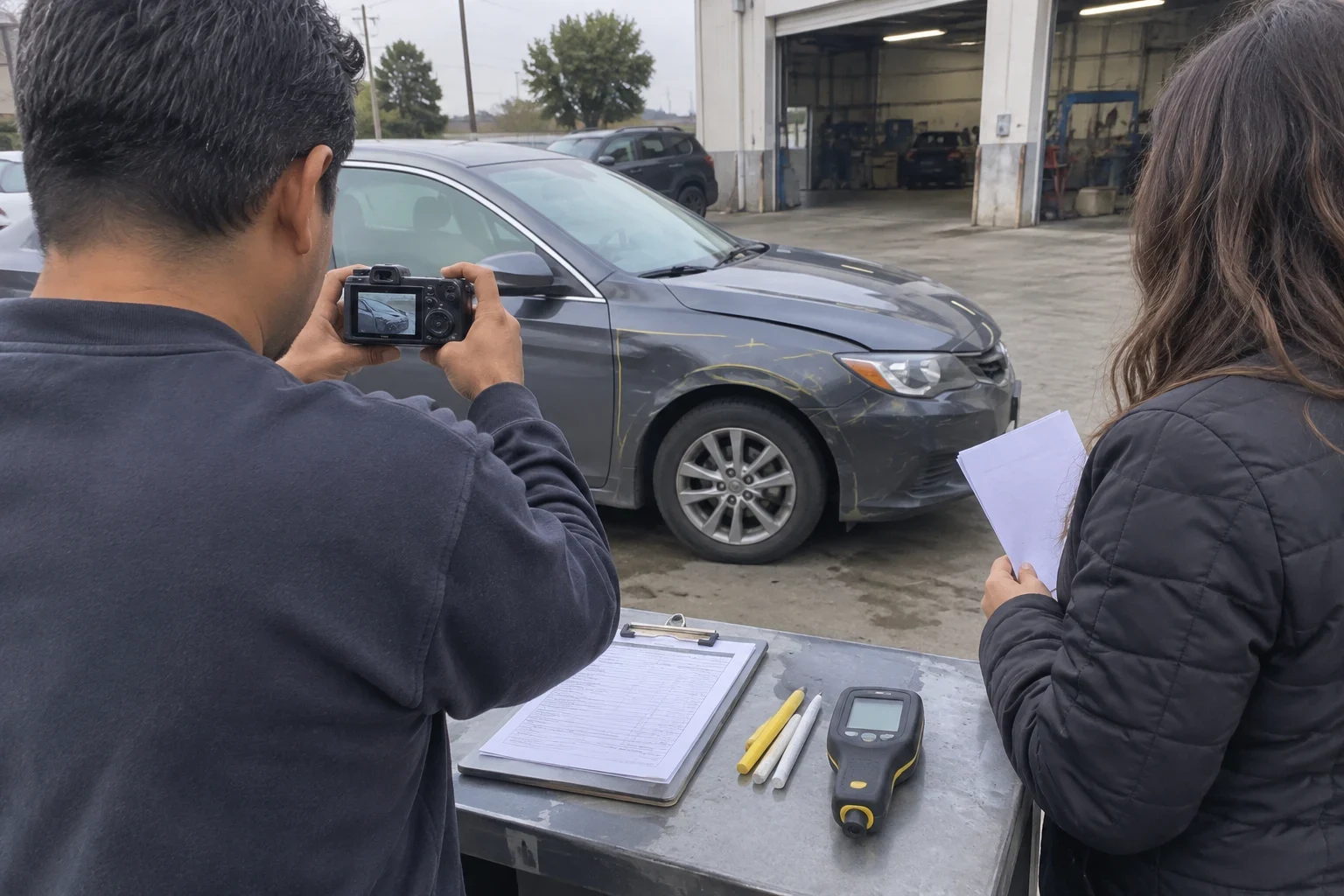
How we handle the claim side of a repair
Most claim delays aren't the bodywork. They come from waiting on an adjuster, waiting on approval, waiting on parts, and finding more damage once the bumper cover comes off. We take care of the shop's part of that back-and-forth with your insurance company, so you aren't stuck passing messages between us.
What we can't do is decide what your policy covers. That's between you and your insurer. What we can do is write a clear estimate, send good photos, ask for approval on added damage and tell you straight when your car will be ready. If that date moves, we call you and tell you why.
California lets you pick the shop that fixes your car, even if your insurer suggests a different one. Drivers from Orosi, Cutler, Dinuba and Visalia bring their claims to us.
What we take care of on a claim
- Line-item estimate
- Every panel, part, labor hour and paint step is written out. You and the adjuster look at the same numbers.
- Photos of the damage
- We photograph your vehicle when it comes in and again during teardown. Clear photos often save an extra adjuster trip and get approval moving sooner.
- Supplements for hidden damage
- Once panels come off, we often find bent brackets, cracked mounts or a damaged sensor. We document it and send a supplement request before we fix it. You hear from us when it goes out and when it comes back approved.
- Parts ordering and tracking
- We order parts as soon as the repair is approved and check arrival dates. If a part is backordered, you know that day, along with the new finish date.
- Deductible explained up front
- In most covered claims, the insurer pays the shop and you pay your deductible at pickup. We tell you that amount before work starts.
- Rental timing
- If your policy includes a rental car, we give you and the rental company a realistic finish date so the coverage lines up with the repair.
Signs it's time to open a claim and get the repair moving
The damage looks bigger than your deductible
A crushed fender, a pushed-in door or a hanging bumper usually costs more than a typical deductible. If you're not sure, bring it in and we'll write an estimate so you can decide.
Another driver hit you
Their insurance should pay for the repair. That's a third-party claim, and the shop side runs much the same as filing on your own policy.
Warning lights came on after the hit
Modern bumpers and mirrors hold parking sensors and cameras. A warning light after a minor bump usually means something behind the cover needs a closer look.
The car pulls or doors don't line up
Uneven gaps, a door that won't close right or a car that drifts can point to structural damage. That may mean frame straightening, which should be on the claim from the start.
The first estimate seems low
Early estimates are often written without taking anything apart. Low numbers are common, and a supplement is the normal way to cover what turns up later.
How a claim repair runs, step by step
- 1
Open the claim and call us
You report the accident to your insurer and get a claim number. Then call us and we'll set a time for you to bring your car in.
- 2
Inspection and estimate
We look the car over, take photos and write the estimate. We send it to your adjuster, along with the photos.
- 3
Approval and a real date
Once the repair is approved, we order parts and give you a finish date based on when they'll actually arrive, not a hopeful guess.
- 4
Teardown and repair
We take damaged parts off, check what's underneath and send a supplement if needed. Then we do the collision repair, plus any paint and refinishing the job calls for.
- 5
Final check and pickup
We check panel gaps, lights and paint match, then road test the car. We call you with a pickup time, and you pay your deductible when you come in.
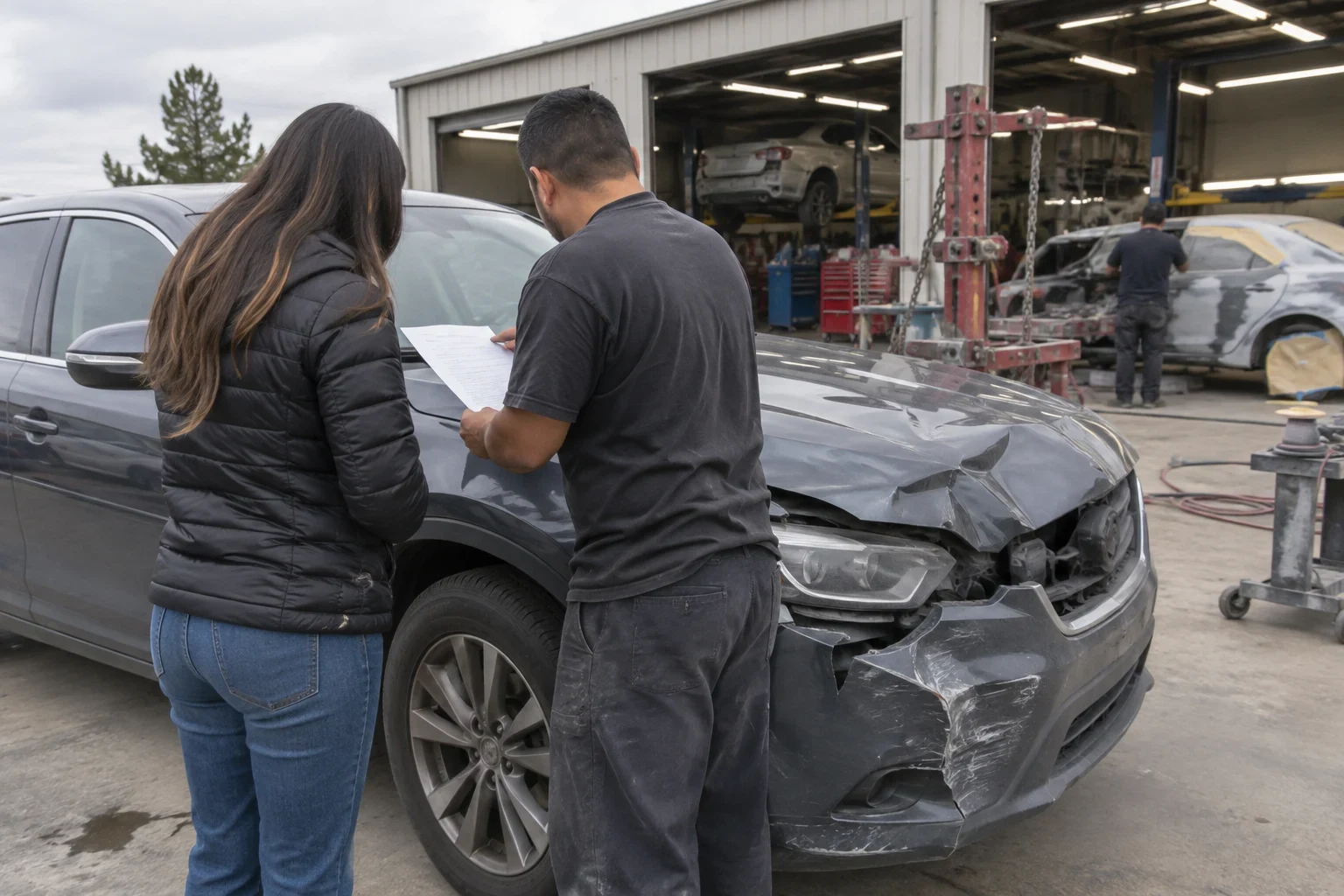
What shapes the cost of a claim repair
On a covered claim, your insurer pays the approved repair cost and you pay your deductible. The total depends on the damage, not on who is paying. We don't put numbers on a repair until we've seen your vehicle.
- Damage behind the panels
- Brackets, absorbers and mounts hidden behind a bumper cover can add parts and labor. We can't know until teardown, which is why supplements happen.
- Type of parts
- Some policies call for new factory parts and others allow aftermarket or used parts. Your policy sets this, and we tell you what was approved.
- Sensors and cameras
- Parking sensors, blind spot units and backup cameras may need to be replaced or reset after a repair, which adds time and cost.
- Paint and blending
- To match color, we often blend paint into the panels next to the repaired one. More panels means more materials and more hours.
Insurance claim questions we hear
Something not covered here? (559) 553-1933
Do I have to use the shop my insurance company recommends?
No. In California you have the right to choose where your car is repaired. Your insurer can suggest a shop, but the choice is yours. Just give them our name when you open the claim.
Do I need the adjuster's estimate before I bring my car in?
Not always. Some insurers send an adjuster first, others ask the shop to write the estimate and send photos. Call us with your claim number and we'll tell you how your insurer usually handles it.
What happens if you find more damage after the estimate?
We stop, photograph it and send a supplement request to your insurer. We don't fix it until it's approved. We call you to explain what we found and whether it changes your finish date.
How long will my car be in the shop?
It depends on the damage, how fast approvals come back and when parts arrive. We give you a date once the repair is approved and parts are ordered. If something pushes it back, you hear it from us that day.
Can you tell me whether my policy covers this?
No, only your insurer can say that. We can show you the damage, explain what the repair involves and tell you what the adjuster approved. For coverage questions, your agent or claims rep is the right call.
Get your claim repair on the calendar
Have your claim number handy if you've got one. We'll set a time to see your car and explain what happens next with your insurer.